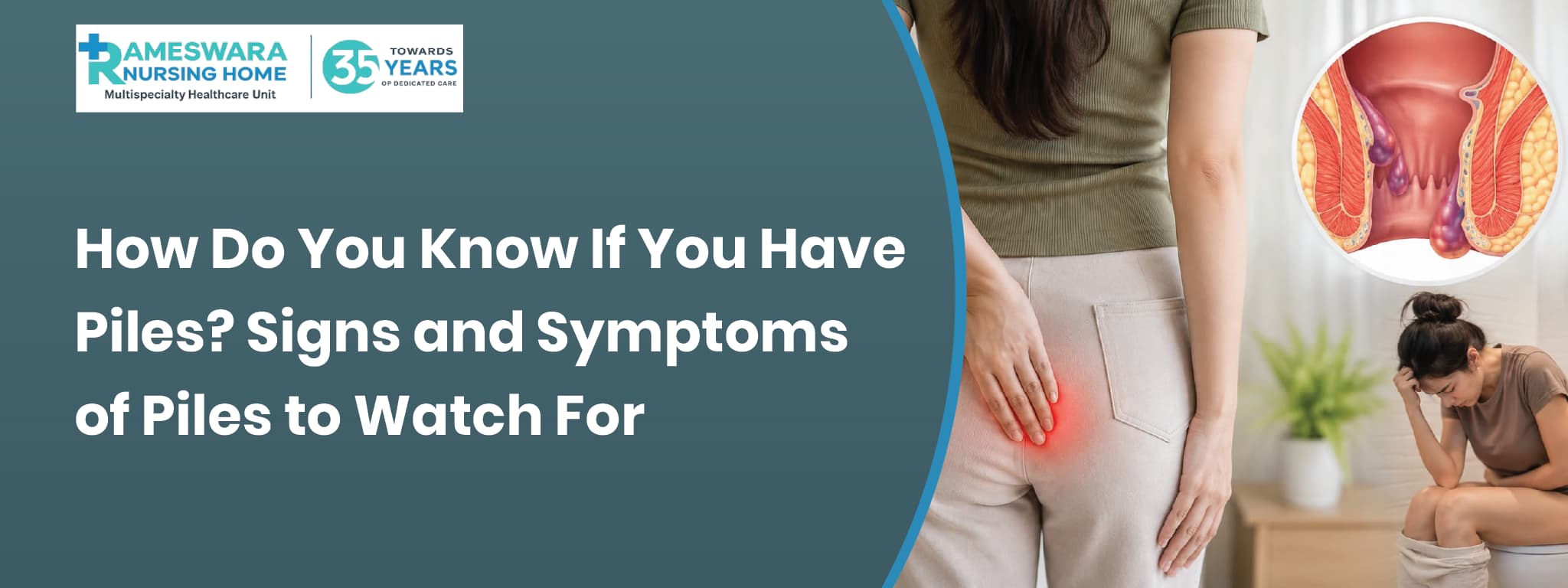

Piles, also called hemorrhoids, are swollen blood vessels inside or around your rectum that often cause itching, pain, and bleeding during bowel movements. Many people in Kolkata experience piles at some point, yet delay seeking help due to embarrassment or uncertainty about when symptoms require professional care. This guide breaks down exactly what the signs look like, how they change as piles progress, what else could be causing similar symptoms, and when it’s time to get examined.
What Are Piles and Why Do They Matter
Piles are enlarged veins in the tissue lining your lower rectum and anus. They develop when increased pressure in that area, from straining during bowel movements, prolonged sitting, pregnancy, or chronic constipation, weakens the vessel walls.
Internal piles sit inside the rectum and usually don't cause pain but may bleed; external piles form under the skin around the anus and can be painful, especially when irritated. Understanding this difference matters because symptoms and treatment options vary.
Many people mistake normal rectal irritation for piles, while others ignore genuine bleeding thinking it's minor. The truth is that piles range from mild to severe, and early recognition prevents progression to complications like blood clots or severe anemia from chronic bleeding.
Also Read: How Are Internal and External Hemorrhoids Different? Symptoms & Treatment
Early Signs of Piles You Shouldn’t Ignore
Symptoms depend on the type and grade of piles, but a handful of signs show up again and again in the early stages. On their own, none of these confirms piles, but two or more together, especially after straining or constipation, is worth getting checked.
-
Bright red blood on toilet tissue, in the toilet bowl, or streaked on stool, usually painless.
-
Itching or irritation around the anus that doesn’t settle with better hygiene.
-
A soft or firm lump you can feel near the anal opening.
-
A sense that the bowel hasn’t fully emptied, even right after a bowel movement.
-
Mild mucus discharge or minor soiling of underwear.
-
Pain or soreness, particularly with external piles or a thrombosed clot.
-
Discomfort or aching after sitting for long periods
How Piles Symptoms Progress: The Four Grades
Internal piles are staged on a widely used 4-grade scale. Symptoms typically get more noticeable, and treatment options narrow, as the grade rises, which is why catching piles early usually means simpler, less invasive care.
| Grade | What’s Happening | Typical Symptoms |
|---|---|---|
| Grade I | Swollen but stays inside the rectum; no prolapse | Often silent; occasional painless bleeding |
| Grade II | Prolapses (slips out) during straining, returns on its own | Bleeding, mild discomfort, brief bulge with bowel movements |
| Grade III | Prolapses and needs to be pushed back in manually | Bleeding, a felt lump most of the time, mucus, itching |
| Grade IV | Permanently prolapsed; cannot be pushed back in | Pain, swelling, higher risk of clotting or strangulation |


Piles vs Look-Alike Conditions
A meaningful share of people who assume they have piles are actually dealing with something else, and the reverse happens too, genuine piles get dismissed as "just a fissure." A quick comparison helps, but it isn’t a substitute for an exam.
| Condition | Pain Pattern | Bleeding Pattern | Distinguishing Clue |
|---|---|---|---|
| Piles (haemorrhoids) | Usually painless if internal; painful if external/thrombosed | Bright red, on the surface of stool or tissue | Soft lump that may reduce on its own (Grade I–II) |
| Anal fissure | Sharp, tearing pain during and after bowel movements | Bright red, small amount | Visible tear at the anal opening; pain is usually more severe than with piles |
| Inflammatory bowel disease (IBD) | Cramping, abdominal pain | Blood often mixed into stool, with mucus/diarrhoea | Systemic symptoms: weight loss, fatigue, urgency |
| Colorectal concern (needs urgent review) | May be painless in early stages | Dark blood, mixed into stool, or unexplained anemia | Age over 45, family history, or new bowel habit change |
When to See a Doctor: A Red-Flag Checklist
Book a consultation rather than waiting it out if you notice any of the following:
-
Bleeding that is dark, black, or mixed through the stool rather than sitting on top of it.
-
Bleeding accompanied by dizziness, fatigue, or paleness (possible anemia).
-
A change in bowel habit lasting more than a couple of weeks.
-
Unexplained weight loss alongside rectal bleeding.
-
A lump that has become hard, purple, or intensely painful (possible thrombosis).
-
Symptoms that don’t improve after 7–10 days of fibre, fluids, and topical care.
-
Any rectal bleeding in someone over 45 with no prior history of piles
Common Mistakes People Make When They Notice These Symptoms
-
Assuming any rectal bleeding is automatically piles and skipping an exam entirely
-
Using over-the-counter creams for weeks without any improvement instead of getting a grade confirmed
-
Ignoring pain from a hard, purple lump, a possible thrombosis that can worsen quickly
-
Waiting for embarrassment to pass instead of booking a consultation, general surgeons see this daily
-
Not mentioning family history of piles or a change in bowel habit, both of which change the diagnostic approach
Choose Rameswaram Nursing Home for Piles Treatment in Kolkata
Choosing piles treatment becomes easier when you know exactly what will happen during the consultation and how treatment decisions are made. At Rameswaram Nursing Home, the approach starts with understanding your symptoms rather than immediately recommending a procedure.
The surgeon reviews your bowel habits, bleeding or pain, duration of symptoms, diet, constipation history, and any previous treatment before deciding whether an examination or further evaluation is required.
The treatment plan depends primarily on the type and grade of haemorrhoids, the severity of symptoms, and whether conservative measures have already been tried.
During your consultation, you can expect:
-
Detailed symptom assessment: The surgeon asks about rectal bleeding, pain, itching, swelling, a lump or prolapse, constipation, and changes in bowel habits.
-
Bowel and lifestyle review: Diet, fibre intake, water consumption, prolonged sitting or straining during bowel movements are considered because these factors can contribute to persistent symptoms.
-
Appropriate examination: When clinically necessary, the surgeon may perform a focused anorectal examination to determine the location and severity of the haemorrhoids.
-
Grade-based treatment planning: Grade I and II haemorrhoids can often be managed without surgery, while some Grade III and IV cases may require a procedure.
-
Discussion of alternatives: Where a procedure is indicated, the surgeon can explain the available options, their expected benefits, recovery requirements, and limitations so that you can make an informed decision.
Treatment Is Not Automatically Surgical
Many patients associate piles treatment with surgery, but early-stage haemorrhoids often respond to conservative management. Depending on the diagnosis, this may include increasing dietary fibre and fluids, avoiding straining, improving bowel habits, sitz baths, and prescribed topical or other medications.
For haemorrhoids that continue to cause bleeding, prolapse, pain, or recurrent symptoms despite conservative treatment, procedures may be considered. The appropriate option depends on the individual case rather than simply the grade of piles.
Rameswaram Nursing Home NABH accreditation and cashless insurance/TPA facilities can also help eligible patients understand their coverage and plan financially before treatment.
Patients should confirm the final package cost, insurance eligibility, exclusions, and any additional charges with the hospital before admission.
Also Read: Can Piles Be Cured Without Surgery? Piles Surgery vs Non-Surgical Treatment
Conclusion
Piles are common, usually manageable, and rarely dangerous, but the symptoms overlap just enough with a handful of other conditions that self-diagnosis is where things go wrong. Bright red, painless bleeding; itching; a lump that comes and goes; and mild prolapse after straining are classic early signs.
Dark blood, blood mixed into stool, pain with weight loss, or symptoms in someone over 45 with no history of piles are signs to get examined properly rather than guess. A short consultation, a digital rectal exam, and where needed, a quick in-house proctoscopy is usually all it takes to know exactly what you’re dealing with and how simple the fix can be.
Chat with our care team online or to book a consultation and get a clear answer.
Medical Disclaimer: This article is for general informational purposes only and is not a substitute for professional medical advice, diagnosis, or treatment. Always seek the advice of a qualified physician or surgeon with any questions you may have regarding a medical condition. Never disregard professional medical advice or delay seeking it because of something you have read here.