
Diabetes is one of the leading causes of kidney disease in India, yet many people don't realise their kidneys are at risk until significant damage has occurred. Diabetic nephropathy, kidney damage caused by high blood sugar over many years, develops silently and can progress to kidney failure without proper prevention and management. The good news is that early intervention, careful blood sugar control, and lifestyle modifications can slow or even prevent this serious complication.
This guide breaks down what diabetic nephropathy actually is, how it progresses, and what treatment looks like at each stage, drawn from how our nephrology team at Rameswaram Healthcare in Kolkata evaluates and manages these patients every week.
What Is Diabetic Nephropathy? A First-Hand Clinical Context
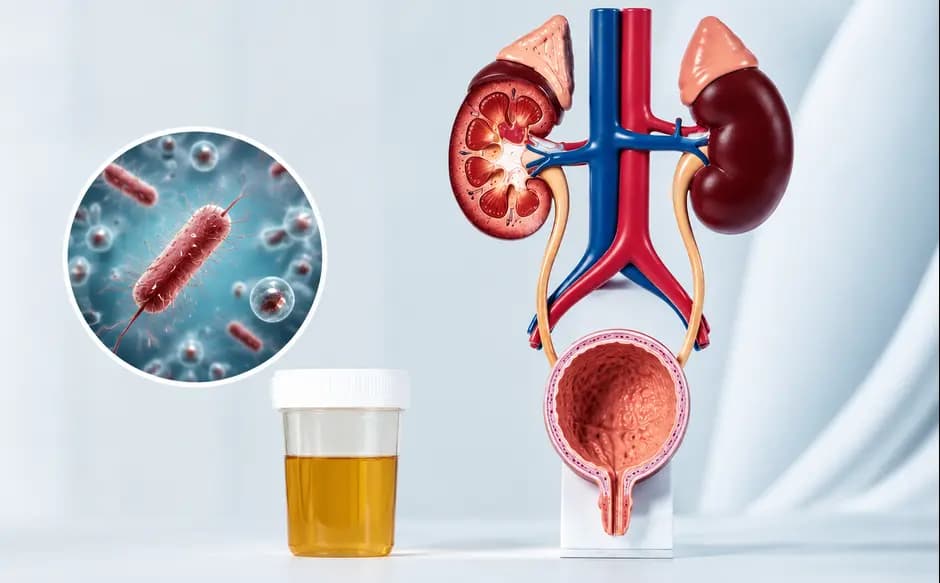
Diabetic nephropathy, also called diabetic kidney disease (DKD), is progressive damage to the kidney's filtering units (glomeruli) caused by years of elevated blood sugar. High glucose thickens and scars the tiny blood vessels inside the kidney, making them "leaky."
Protein that should stay in the blood starts spilling into urine, and over time the kidney's ability to filter waste declines.
How Diabetes Damages the Kidneys
Each kidney contains roughly a million nephrons, each with a glomerulus acting as a microscopic sieve. Chronic high blood sugar triggers a cascade: thickening of the glomerular basement membrane, expansion of the mesangium (the supporting tissue between blood vessels), and eventually scarring called glomerulosclerosis.
Long-standing high blood pressure, extremely common alongside diabetes, accelerates this damage further, which is why blood pressure control is treated as equally important as sugar control in every treatment plan we build.
Early Warning Signs and Symptoms You Shouldn't Ignore
The Silent Early Stage
This is the stage most patients skip past entirely. In the first several years, diabetic nephropathy typically causes zero symptoms.
Kidney function (eGFR) can look completely normal on a basic blood test even while microalbuminuria, small amounts of protein in urine, has already begun. This is precisely why annual urine albumin-to-creatinine ratio (UACR) testing is recommended for every person with diabetes, not just those who "feel unwell."
Symptoms That Appear in Later Stages
- Persistent swelling in the ankles, feet, or around the eyes (fluid retention)
- Foamy or bubbly urine (a visible sign of heavy protein loss)
- Fatigue and reduced appetite
- Difficult-to-control blood pressure despite medication
- Nausea, muscle cramps, and itching as waste products build up
- Reduced urine output in advanced stages
If any of these appear in someone with a history of diabetes, it warrants a same-week nephrology evaluation rather than a "wait and watch" approach, advanced-stage diabetic nephropathy can progress to kidney failure faster than many patients expect.
The Stages of Diabetic Nephropathy: KDIGO Classification
Kidney specialists don't stage diabetic nephropathy by symptoms, they stage it using two numbers together: your eGFR (how well the kidneys filter) and your urine albumin level (how much protein is leaking). This is the KDIGO "heat-map" model used worldwide, including at our centre.
| CKD Stage | eGFR (mL/min/1.73m²) | What It Generally Means |
|---|---|---|
| G1 | 90+ | Normal filtration, but damage markers (protein) may already be present |
| G2 | 60–89 | Mildly reduced function |
| G3a | 45–59 | Mild-to-moderate reduction |
| G3b | 30–44 | Moderate-to-severe reduction |
| G4 | 15–29 | Severely reduced, pre-dialysis planning stage |
| G5 | Below 15 | Kidney failure, dialysis or transplant discussion begins |
Alongside eGFR, urine albumin is graded A1 (normal), A2 (moderately increased/microalbuminuria), or A3 (severely increased/macroalbuminuria). A patient with normal eGFR but A3 albuminuria is already considered higher-risk than someone with mildly reduced eGFR but normal albumin, this is why relying on creatinine alone, without a urine albumin test, misses early disease.
How Diabetic Nephropathy Is Diagnosed
A doctor may use the following tests and assessments to confirm diabetic nephropathy and evaluate kidney damage:
1. Urine Albumin-to-Creatinine Ratio (UACR)
A simple spot urine test remains the single most important early-detection tool. A UACR above 30 mg/g on two of three tests over 3 months confirms albuminuria and is often the first objective sign of diabetic kidney involvement, sometimes years before eGFR drops.
2. eGFR and Serum Creatinine
A blood creatinine test, converted to eGFR using a validated formula, tracks overall filtering capacity. KDIGO's 2024 guideline recommends using a combined creatinine-cystatin C equation in specific situations, such as when the result will change a medication dose, for a more accurate reading.
When a Kidney Biopsy Is Needed?
Most diabetic nephropathy is diagnosed clinically, without a biopsy, when the picture is classic: long-standing diabetes, gradually rising albuminuria, and no other explanation. A biopsy is reserved for atypical presentations, rapid decline, blood in urine, very short diabetes duration, or a mismatch that suggests a different or additional kidney disease is at play. Our nephrology team reserves biopsy referral for exactly these atypical cases rather than as a routine step.
How Is Diabetic Nephropathy Treated? Evidence-Based Options
Treatment of diabetic nephropathy involves a combination of measures aimed at controlling blood sugar and blood pressure, protecting kidney function, reducing cardiovascular risk, and slowing the progression of kidney disease.
1. Blood Sugar and Blood Pressure Control; The Foundation
Every guideline still starts here. An individualised HbA1c target (commonly around 7%, adjusted for age and other conditions) and a blood pressure target of roughly 130/80 mmHg or lower are the base layer that every other treatment builds on.
2. ACE Inhibitors and ARBs
These blood-pressure medicines do double duty: they lower pressure inside the glomerulus specifically, reducing protein leakage independent of their blood-pressure-lowering effect. KDIGO 2024 recommends continuing an ACE inhibitor or ARB even as eGFR falls below 30, as long as it's tolerated.
3. SGLT2 Inhibitors; Now the First-Line Standard
This is the biggest shift in nephrology in the last five years. KDIGO 2024 gives its strongest recommendation grade to starting an SGLT2 inhibitor in every patient with type 2 diabetes, CKD, and an eGFR of 20 or above, regardless of how much protein is in the urine. Large trials behind this recommendation showed meaningful reductions in kidney failure progression.
4. GLP-1 Receptor Agonists and Finerenone
Newer evidence supports GLP-1 receptor agonists for their kidney-protective effect beyond blood sugar control, and finerenone, a non-steroidal mineralocorticoid receptor antagonist, for patients who remain at high risk despite an ACE/ARB and SGLT2 inhibitor. Trials such as FIDELIO-DKD showed a reduced composite kidney outcome with finerenone added to standard therapy.
5. Diet and Lifestyle Adjustments
- Moderate, not extreme, dietary protein restriction (extreme restriction is no longer routinely advised)
- Sodium restriction to help blood pressure control
- Potassium monitoring, especially once ACE/ARB, SGLT2i, or finerenone are combined
- Smoking cessation and regular physical activity within safe limits
- Weight management where relevant


Dialysis and Advanced-Stage Care
Once eGFR falls into the G5 range or uraemic symptoms appear, dialysis (haemodialysis or peritoneal dialysis) becomes necessary to take over the kidney's filtering role. Planning for this, including vascular access surgery, ideally starts well before stage G5 is reached, not after an emergency admission.
| Stage | Primary Treatment Focus |
|---|---|
| G1–G2 (early) | Glycemic control, ACEi/ARB, SGLT2 inhibitor, annual UACR monitoring |
| G3a–G3b (moderate) | Above, plus finerenone/GLP-1RA consideration, dietary sodium control, dose adjustment of other medicines |
| G4 (severe) | Above, plus anaemia and bone-mineral management, dialysis-access planning, nephrology-led care |
| G5 (kidney failure) | Dialysis initiation, transplant evaluation where appropriate, continued cardiovascular risk management |
Can Diabetic Nephropathy Be Reversed, or Only Slowed?
Early-stage albuminuria (A2, microalbuminuria) can genuinely improve or even normalise with aggressive blood sugar and blood pressure control combined with the medicines above, this is the closest thing to "reversal" that current medicine offers.
Once significant scarring (glomerulosclerosis) has occurred and eGFR has dropped meaningfully, the realistic goal shifts from reversal to slowing the rate of decline and protecting the heart, since cardiovascular disease remains the leading cause of death in this population. This is exactly why the earlier the diagnosis, the more options remain on the table.
Common Mistakes People With Diabetic Nephropathy Make
-
Skipping the annual urine albumin test because "creatinine level was normal"
-
Stopping ACE inhibitors or ARBs on their own after reading about potassium risk, instead of getting potassium monitored
-
Assuming a kidney-friendly diet means cutting protein drastically without medical guidance, which can cause muscle loss without benefit
-
Waiting for swelling or fatigue to appear before seeing a nephrologist
-
Treating diabetes and kidney disease as two separate problems managed by two disconnected doctors, instead of one coordinated care team
What a Nephrology Consultation Actually Involves at Rameswaram Healthcare
Having sat in on how our Urology & Nephrology outpatient flow runs, here's what a first visit typically looks like for a patient referred with suspected diabetic nephropathy:
1. Detailed history and review of existing reports: Diabetes duration, current medicines, prior HbA1c and creatinine trends are reviewed before any new test is ordered, so patients aren't repeating tests unnecessarily.
2. Baseline diagnostics: UACR, serum creatinine/eGFR, electrolytes, and a renal ultrasound (USG-KUB) are typically done in-house on the same visit using our in-house pathology and imaging setup, so results are usually available within hours rather than days.
3. Consultant review and staging: One of our senior nephrology/urology consultants reviews the combined picture and assigns a CKD stage, explaining it in plain terms rather than just handing over a lab report.
4. Individualised treatment plan: Medication choices (ACEi/ARB, SGLT2i, and others as appropriate) are tailored to the patient's eGFR, potassium level, and other conditions, with a monitoring schedule set from day one.
5. Follow-up and dialysis-readiness planning: For patients already in later stages, our dedicated dialysis unit is involved early so that access planning isn't left until an emergency.
Diabetic Nephropathy Care Cost in Kolkata: What to Expect
Costs vary by hospital, consultant, and how advanced the disease is at diagnosis. The indicative ranges below reflect typical Kolkata private-hospital pricing for the diagnostic and consultation components of diabetic nephropathy care (actual costs should always be confirmed directly with the hospital's billing desk, as they depend on individual case complexity):
| Component | Approximate Range (Kolkata, Private Hospital) |
|---|---|
| Nephrologist consultation | ₹1,200–₹1,900+ |
| Renal investigations package | Around ₹2,000 at CMRI |
| Individual tests | Varies by hospital and laboratory |
| Haemodialysis | Confirm current per-session tariff directly with the hospital |
Important: Costs can change based on hospital, doctor, test method, insurance coverage, and whether additional medicines, consumables, or hospital charges apply. It is better to describe these as indicative prices rather than fixed Kolkata-wide rates.
Conclusion
Diabetic nephropathy is common, largely silent in its early years, and, unlike many chronic kidney conditions, genuinely responsive to timely treatment. The shift in nephrology over the past few years, with SGLT2 inhibitors now recommended as first-line therapy alongside ACE inhibitors/ARBs and, where needed, finerenone or GLP-1 receptor agonists, means more tools exist today to protect kidney function than at any point before.
The single most useful thing a person with diabetes can do is get an annual urine albumin test even when they feel completely fine, and to have any swelling, foamy urine, or unexplained fatigue checked by a nephrologist promptly rather than later.
If you or a family member has diabetes and hasn't had a kidney function check in the last year, Rameswaram's Urology & Nephrology team in Kolkata can help you get a clear picture of where you stand and what, if anything, needs to change.
Chat with our medical assistant on Whatsapp or reach out to our Urology & Nephrology desk directly to book a consultation.
Medical Disclaimer: This article is for general informational purposes only and does not constitute medical advice, diagnosis, or treatment. Diabetic nephropathy management must be individualised by a qualified nephrologist based on your complete medical history and test results. Please consult a doctor before making any changes to your treatment plan.